

Protecting Tire Performance from Within: How Hydrotalcite Extends the Life of Halobutyl Rubber Compounds
Modern tires are expected to withstand millions of deformation cycles while maintaining safety, durability, and long-term performance under demanding operating conditions. Although carbon black, silica, and advanced elastomers provide the mechanical backbone of tire compounds, another challenge occurs at the molecular level—one that cannot be seen from the outside. During processing and long-term service, halobutyl rubber (CIIR and BIIR) can generate trace amounts of hydrogen halides (HCl or HBr). Even at very low concentrations, these acidic species can accelerate polymer degradation, interfere with the stability of the rubber network, and gradually reduce resistance to thermal aging. Over time, this may contribute to the deterioration of mechanical properties and the long-term reliability of tire components such as innerliners.
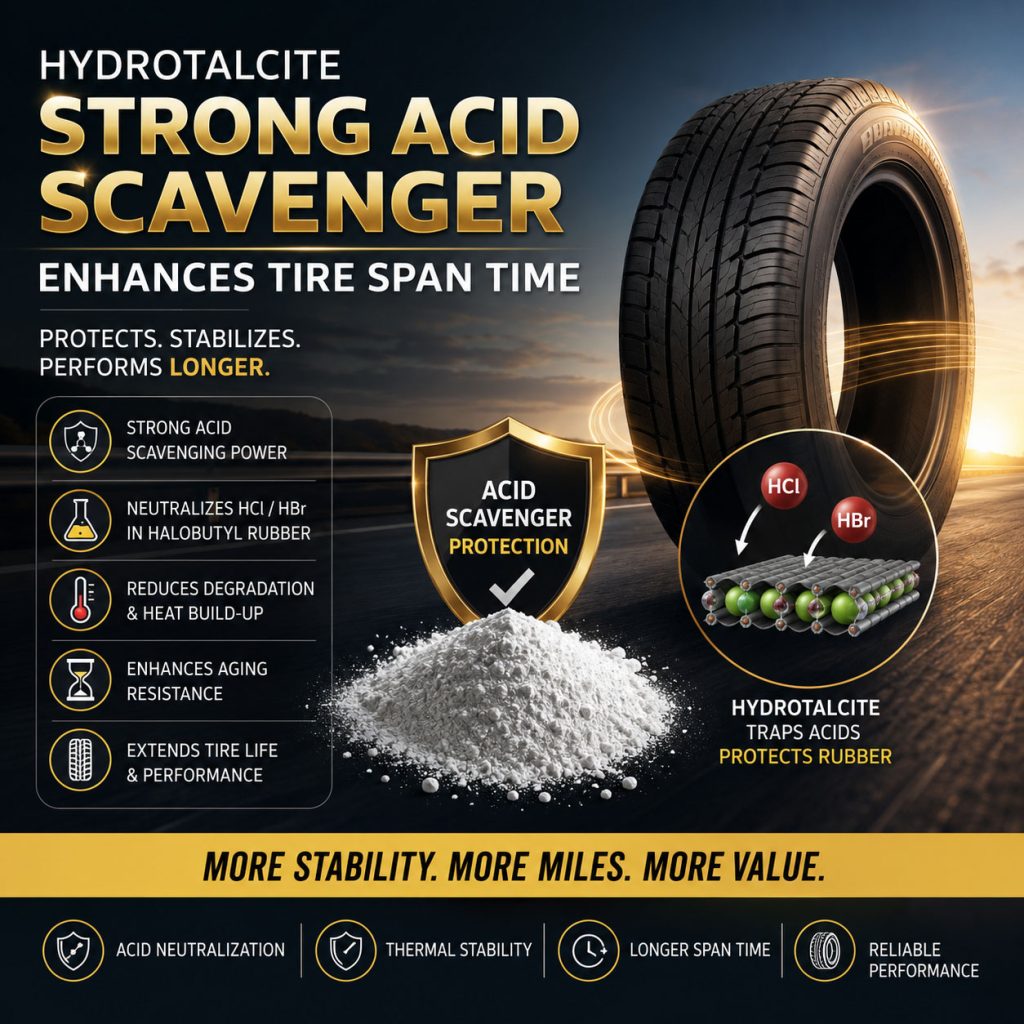
This is where hydrotalcite, a synthetic layered double hydroxide (LDH), plays a unique role. Unlike conventional reinforcing fillers, hydrotalcite is not added to increase stiffness or strength. Instead, it functions as a highly effective acid scavenger, protecting the polymer from chemical degradation. Its layered crystal structure provides active sites capable of capturing and neutralizing acidic species before they can initiate further deterioration of the rubber matrix. By reducing the concentration of HCl and HBr, hydrotalcite helps suppress acid-catalyzed degradation pathways and improves the long-term stability of the compound. The result is a rubber formulation that is better equipped to resist heat aging and maintain its performance over extended service periods. Because degradation is slowed at its source, the compound can retain its physical integrity more effectively under prolonged thermal and mechanical stress.
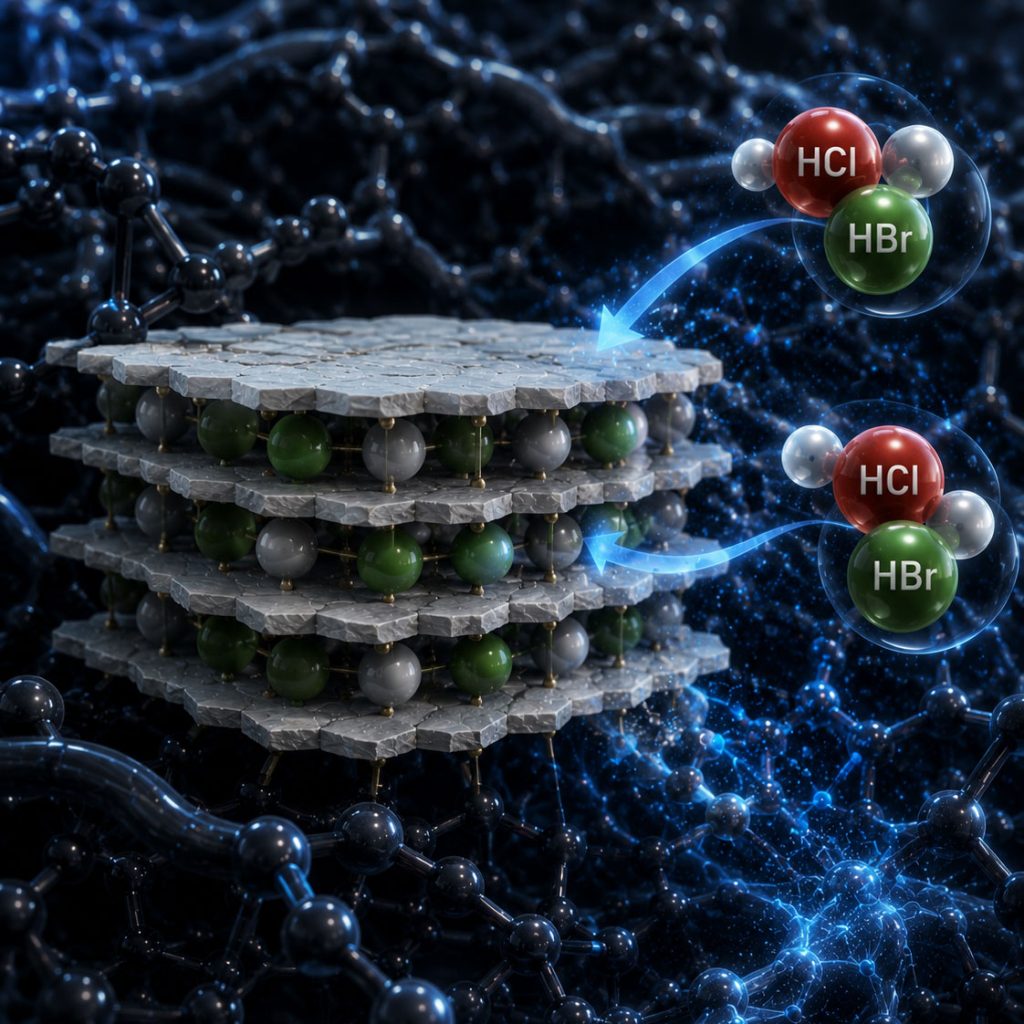
Claymore ST, NanoParmin’s high-performance hydrotalcite, has been developed specifically for advanced polymer applications where long-term stability is critical. Engineered with a controlled layered double hydroxide structure and optimized chemical composition, Claymore ST delivers efficient acid scavenging while remaining compatible with industrial rubber processing. Rather than acting as a conventional filler, it serves as a functional additive that enhances the chemical durability of the elastomer. The concept is straightforward yet powerful. Instead of repairing damage after it has occurred, Claymore ST helps prevent acid-induced degradation before it can propagate throughout the polymer network. This proactive protection contributes to improved thermal stability, enhanced aging resistance, and more consistent long-term performance.
As tire technology continues to evolve toward higher efficiency, greater durability, and longer service life, attention is increasingly shifting from macroscopic reinforcement to molecular-level stabilization. Functional additives that control degradation mechanisms have become essential components of modern compound design. Claymore ST embodies this next generation of stabilization technology. By neutralizing acidic by-products within halobutyl rubber compounds, it protects the polymer from within—supporting longer-lasting tire performance through advanced hydrotalcite chemistry.
